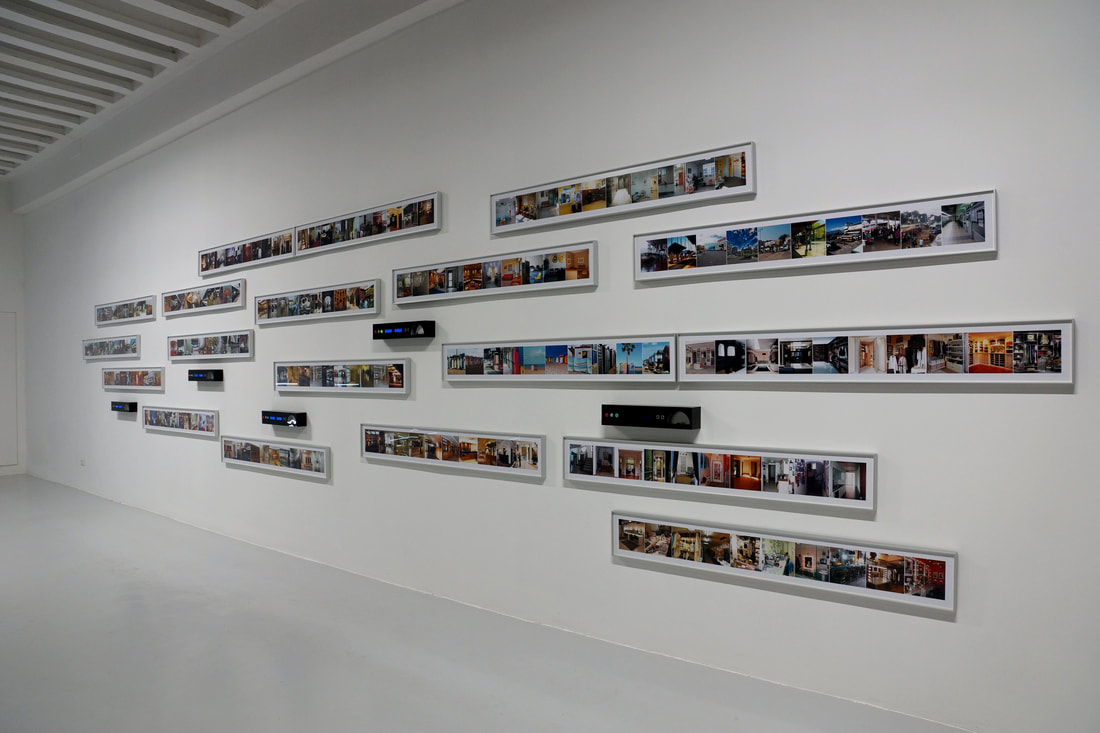
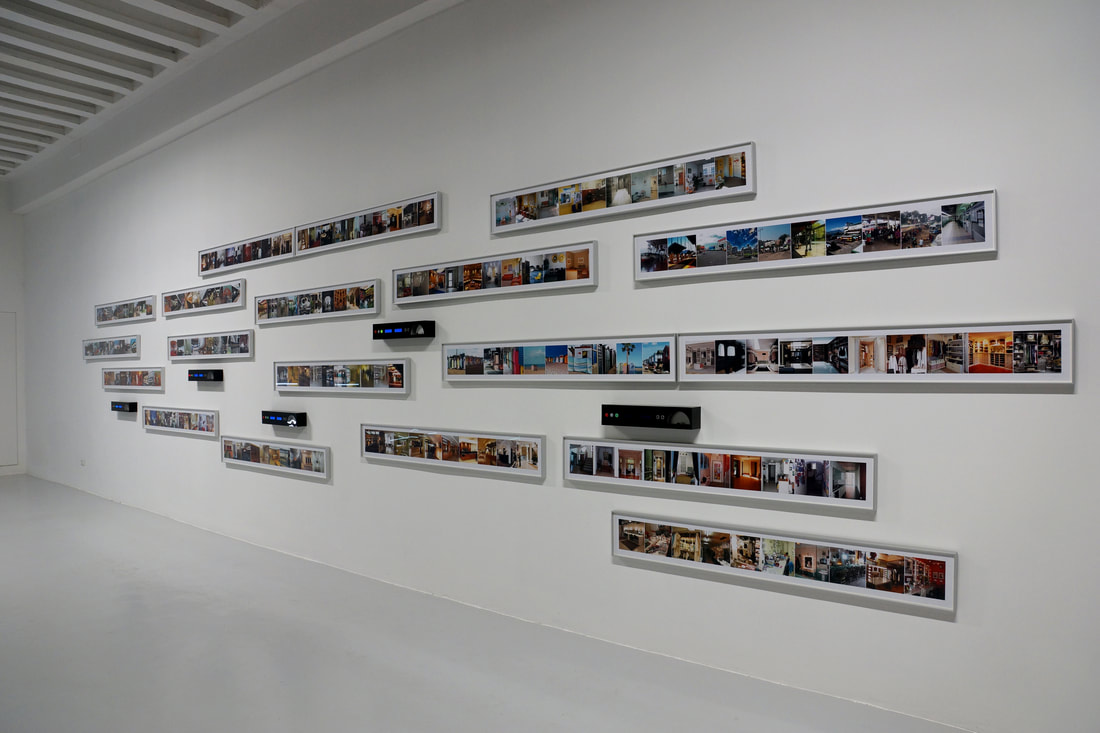
The characteristic of borderline spaces is that they are on the border between different dimensions, substantially between daily life and a different time, the one connected with the function people happen to be fulfilling. This is why many of the spaces we are talking about can trigger a change in status, often temporary, bound to finish as soon as the function for which these spaces have been created ends, and will be recreated as soon as that function is needed again. Just to take an example, there is the dressing room in the theatre; it visually and conceptually creates the actor or actress using it, and has the function of both preparing the a characterand of bringing the actors back to the status of an “private person” after the performance is over. Some examples included in the photographs: airports/passengers; hospital surgeries/patients; school halls/students; bus terminals/commuters; seaside cabins/bathers; gym changing rooms/sports practitioners; etc. Similarly, the member of the public who crosses the threshold into the gallery where the photos are displayed acquires the socially approved status of a visitor. The visitor is the living completion of the work of art. The main function of our contemporary super-specialised society is to optimise consumption, and as a result contemporary art is increasingly pushed to serve the market rather than culture. This is why I found it indispensable to measure the habits and behaviour of visitors through specific electronic instruments consisting of sensors and displays where we can read data on movements, distance and time the visitors stop in front of an exhibit. The electronic devices are visible and hanging next to the photos on display. The experience of the person who is a member of the public and a visitor cannot be evaluated and measured by the electronic instruments, but just observed in real time through interactive communication.
Apaf1_Bcl2, 2012 - kinetic sculpture, 2012
The topic of this machine is Caloro’s attempt to come to terms with sensory balance, derived from genetics. The kinetic sculpture, with an overall height of 3.60 meters and a diameter of 30 cm, consists of a lower part, the base, as well as an upper part, which Caloro refers to as an extremity, a fact that already invites a comparison with the human body. These two components are composed of carbon fiber rods, and are linked by a middle part of Plexiglas. In this transparent tube there are two motors and an electronic control board, which work together to make the upper extremity tilt. Further material contributing to this are the characters of two of Caloro’s genes that have been stored on the control board. These two genes, Apaf1 and Bcl2, are what give the sculpture its title; they are significant for the development of the inner ear as an organ of balance, the malfunction of which may cause dizziness. With this sculpture, the interest in the relationship between man and machine that runs though Caloro’s work is also present in the perception, which has already been filtered by our expectations. It leads us almost automatically to the question of why the machine acts this way and not in another way—a question we also ask when we wish to gain an understanding of our human counterparts.
Piedi - Plaster casts, calipers, 2011
For the installation Piedi, the artist had plaster casts made of his feet, and combined these with calipers. Brutally, the tool’s slides dig into the plaster foot, getting a fast grip on it and damaging its surface. Caloro has created a strong metaphor here. In this instance the hint of violence in measuring the feet, linked with a restricting of the freedom of movement, gives rise to a comparison with an unpleasant development in our social situation: people today are increa