2023/24 — Duration: to be defined Carpenter’s folding rule First presented: to be defined Performers: to be defined
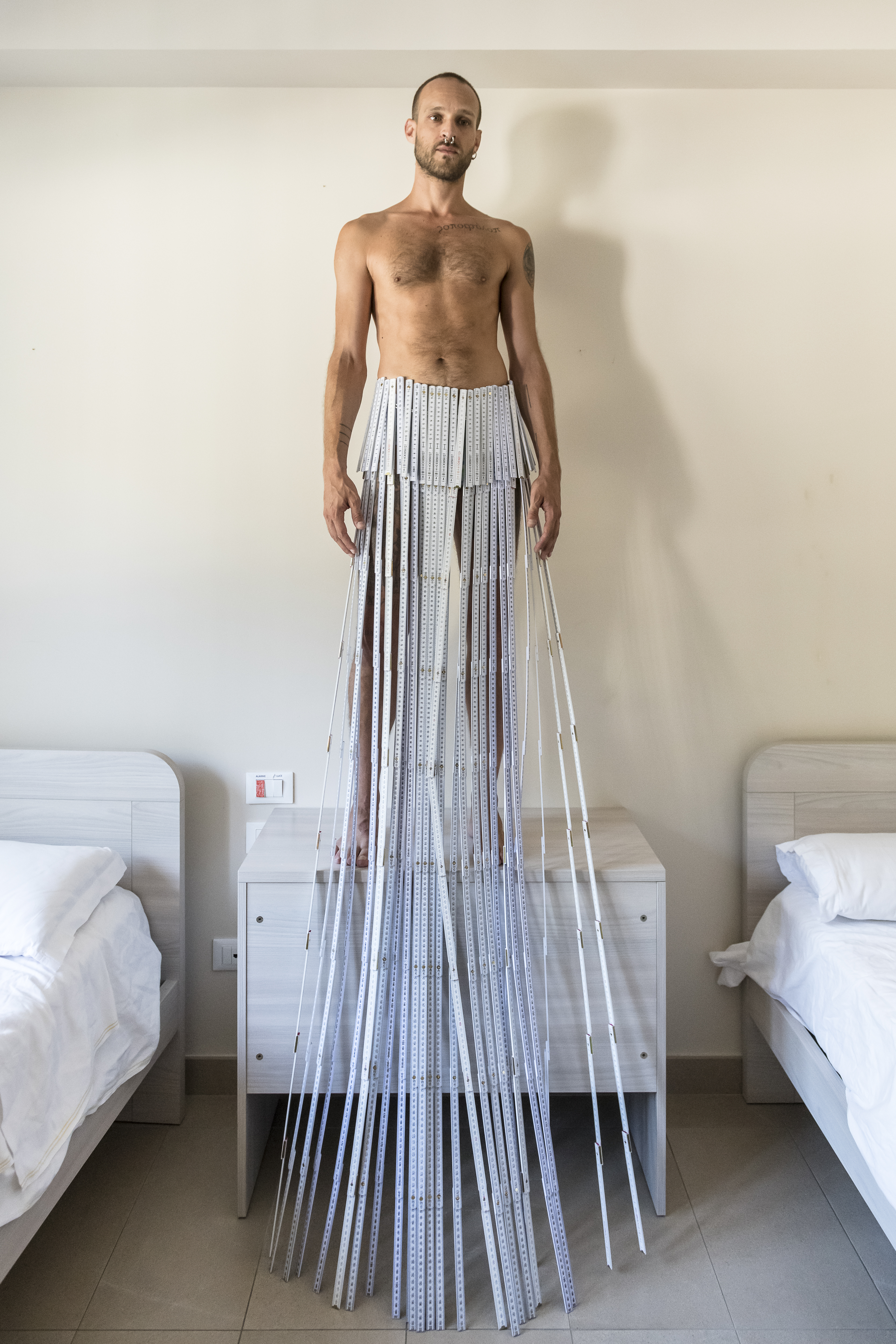
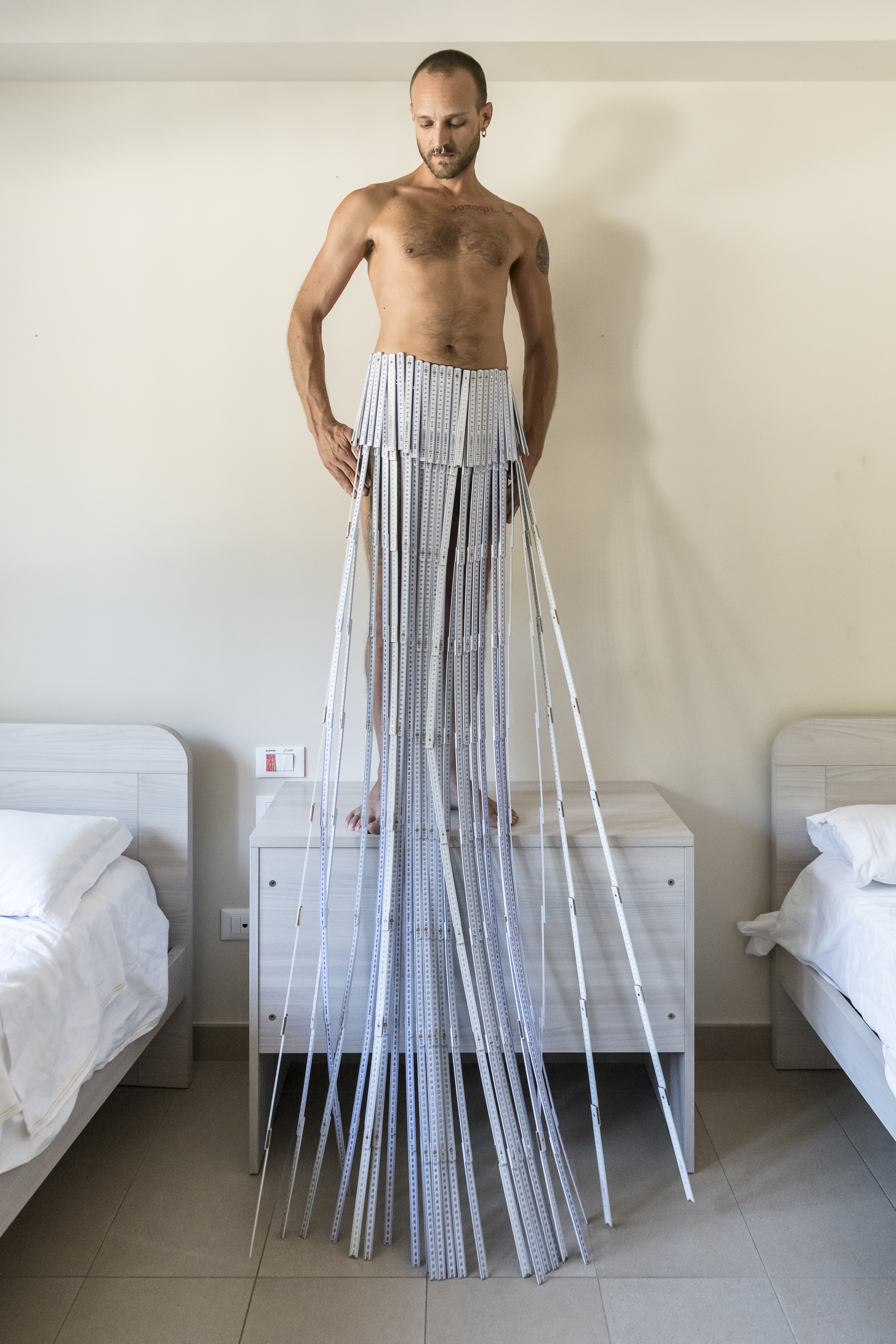
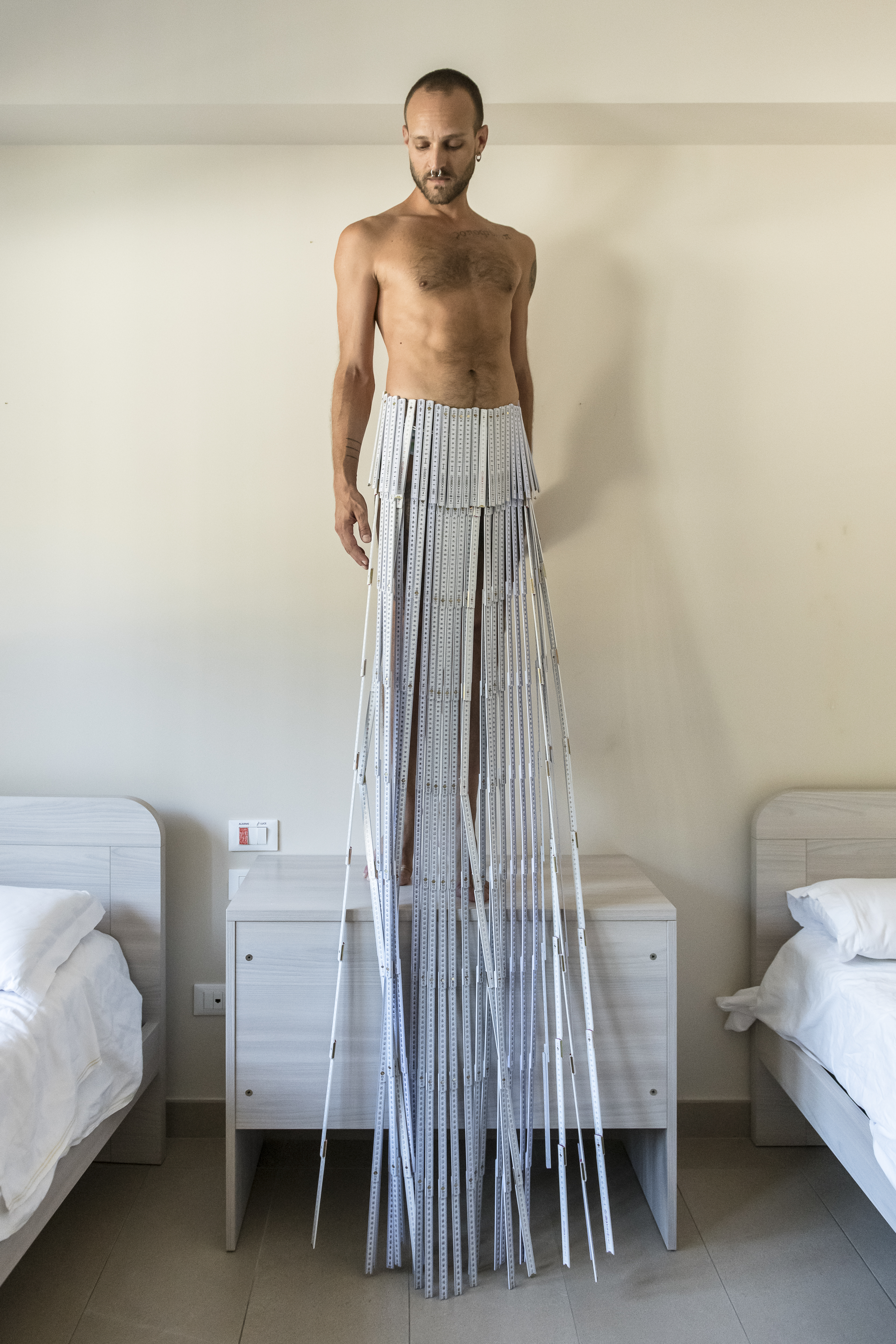
A carpenter’s folding rule is used as a generator of movements. The performer takes the rule, opens it into different configurations and moves along the lines, angles and shapes the object produces. The rule establishes the direction, amplitude and geometry of each gesture: it dictates positions to the body. The performer measures up physically to the object, adapting the body to its joints. The shapes of the rule — straight lines, acute angles, zigzags, extensions — become movement instructions. In a second phase the performer lets go of the folding rule and repeats the movements without the object in hand. The gestural sequence remains the same, but the physical constraint is absent. The body retains the memory of the shapes imposed by the rule and reproduces them in the void. The rule undergoes a passage: from an inanimate, rigid object it becomes the device that generated the choreography. The performer moves from being guided by the object to carrying its trace in the body, repeating positions that are no longer supported by anything.
Immanent regime. The folding rule is the string: it dictates positions to the body and is then removed. The body goes on reproducing the shapes imposed by the absent object. Here the string leaves an imprint — the constraint disappears but the trace remains in the movement.
Photo: Cristina Crippa Produced by artQ13.